Guided Biofilm Therapy Kitchener
Think about the last time you cleaned your bathroom. You probably wiped down surfaces that looked clean, right? But when you used that special blue cleaner that shows hidden grime, suddenly you saw all kinds of stuff you missed. Your teeth work the same way. What looks clean might be covered in invisible bacteria doing damage every single day. This treatment is often included as part of our comprehensive dental clinic services to maintain optimal oral health.
That’s where Guided Biofilm Therapy comes in. At Homer Watson Dental in Kitchener, we use this approach to make the invisible visible and then remove it without the scraping and discomfort you might remember from past cleanings.



- AppointmentAbout 45–60 min
- ComfortWarm spray, no scraping
- RecommendedEvery 3–6 months
- CostUsually insurance-covered
What Biofilm Is & Why It Matters
Biofilm sounds like something from a science fiction movie, but it’s simply the sticky layer of bacteria that grows on your teeth. You can’t usually see it — you feel it with your tongue when your teeth go fuzzy or rough, especially in the morning. This invisible layer drives most dental problems: cavities, gum disease, and bad breath that no amount of mints will fix. The bacteria release acids that eat away at enamel and irritate your gums until they turn red, puffy, and bleed when you brush.
Regular brushing helps, but it’s like vacuuming under the couch — you get some of it while plenty stays hidden between teeth, under the gumline, and around dental work or implants. Left unchecked, biofilm buildup can progress to decay that needs dental restorations or more advanced treatment.
How Guided Biofilm Therapy Works
Guided Biofilm Therapy (GBT) follows a specific eight-step protocol, so nothing is random or rushed. The same system is followed every visit, whether you see the same hygienist or someone new — and research shows that order gives better results than winging it. Here’s what a visit at our Pearson Street clinic looks like.
- Assessment
We examine your teeth and gums, check for areas of concern, and review your dental history. If you haven’t had x-rays recently, we may take those to see what’s happening below the surface.
- Disclosure
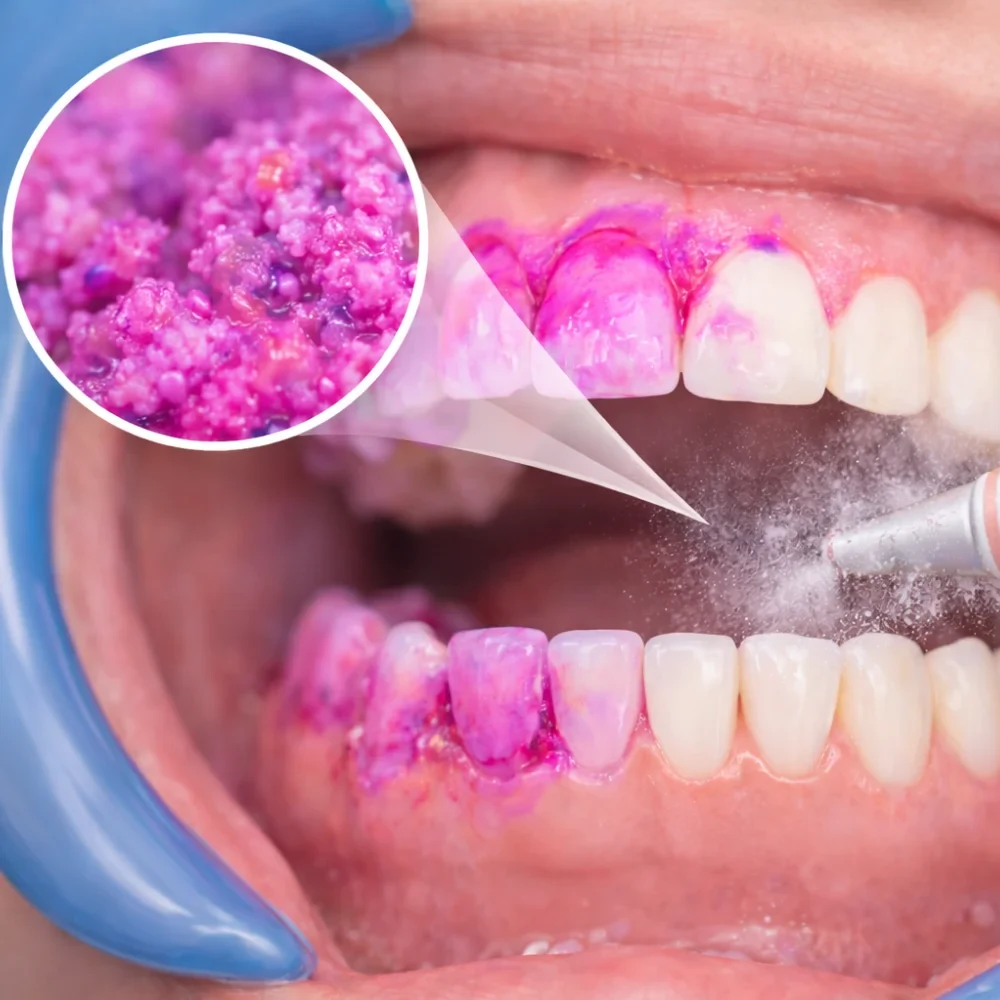
A harmless dye sticks to biofilm and turns it bright pink or purple, so hidden bacterial colonies show up clear as day. It isn’t about blame — it’s a map of exactly where your trouble spots are, at the clinic and at home.
- AIRFLOW biofilm removal
A gentle spray of air, warm water, and fine erythritol or glycine powder lifts biofilm, stains, and early mineral deposits — no scraping tools. Specialized nozzles reach subgingival (below the gumline) areas and around implants.
- PIEZON for hard deposits
For harder calculus or tartar, ultrasonic vibrations and water break up deposits without damaging enamel, using tips shaped for different areas of your mouth.
- Final check & next visit
We confirm everything is clean, point out spots that need extra attention at home, and schedule your next visit based on your individual needs.
The warm water and gentle whooshing air feel nothing like the cold, high-pitched scraping of traditional cleanings. For patients in Forest Heights or Stanley Park with sensitive teeth — or anyone who’s put off the dentist after an uncomfortable experience — this is often the difference between showing up for care and waiting until something hurts.
Who Guided Biofilm Therapy Helps
GBT is gentle enough for almost everyone, but it’s especially valuable for a few groups of patients around Kitchener.
Dental implant patients
Implants can’t get cavities, but the tissue around them can get infected — a condition called peri-implantitis that can break down supporting bone. Metal tools scratch implant surfaces where bacteria hide; GBT’s air polishing cleans dental implants, crowns, bridges, and veneers safely. Popular with patients in Alpine Village and Country Hills.
Gum disease
With gingivitis or periodontitis, specialized nozzles reach into gum pockets to remove the biofilm causing inflammation, with less trauma to already-tender tissue — giving your gums a chance to heal. Some patients need cleanings every three or four months while managing it.
Kids & anxious patients
The dye is a great teaching tool — kids see the pink spots and understand why brushing matters. The gentle spray and shorter appointments are far less intimidating than metal instruments for children in Doon and Downtown Kitchener.
Why Patients Prefer It Over Traditional Cleaning
Effective cleaning doesn’t have to be uncomfortable. Research shows GBT removes biofilm as well as or better than traditional methods, while being gentler on enamel and soft tissue — with higher patient satisfaction. Here’s how the two compare.
Guided Biofilm Therapy
- Warm water and a gentle whooshing spray — no cold, scraping instruments
- Safe for implants, crowns, bridges, and veneers
- Often shorter appointments because we work from a precise map
- Evidence-based, refined by ongoing clinical research
Traditional metal cleaning
- Cold water and high-pitched scraping that makes you tense up
- Metal tips can scratch implant and restoration surfaces
- Harder to see and target hidden biofilm without disclosure dye
- Often longer, less comfortable visits
Caring for Your Teeth Between Visits
What you do at home matters as much as your cleanings — you’re in control of your teeth 363 days a year. After each visit, your hygienist shows you the exact spots where biofilm builds up in your mouth, then helps you build habits to keep them clear.
- Brush twice a day, ideally with an electric toothbrush
- Clean between teeth once a day with floss, interdental brushes, or a water flosser
- Focus on your personal trouble spots — back corners and tight contacts are common misses
- Ease off brushing too hard, which wears enamel while still missing other areas
Cost, Coverage & How Often to Come In
How often you need GBT depends on your mouth. Healthy gums, no history of gum disease, and good home care usually mean cleanings every six months. If you’ve had gum disease, have diabetes, smoke, or are pregnant, every three or four months is common. Regular visits also help you avoid bigger problems down the road, from deep cleanings to root canal therapy. GBT is one of several preventive options within our dental clinic services.
Most Ontario dental plans cover preventive cleanings, and Guided Biofilm Therapy counts as preventive care — if your plan covers two cleanings a year, it usually covers this too. Cost varies with what your visit needs, and if you require more frequent cleanings for gum disease we can provide documentation for your insurer. Our front desk at 15 Pearson Street will verify your coverage before your appointment, so there are no surprises.
Common Questions About Guided Biofilm Therapy
Does it hurt?
Most people find it more comfortable than traditional cleanings. The warm water and gentle spray are far less intense than scraping with metal instruments.
If it doesn’t hurt, is it really working?
Yes. Effective cleaning doesn’t have to be uncomfortable — the goal is removing biofilm and deposits, not testing your pain tolerance. Studies show GBT removes biofilm as well as or better than traditional methods.
Is Guided Biofilm Therapy backed by research?
It’s evidence-based dentistry. Studies of gum health, pocket depths, and bleeding on probing support GBT for both preventing and treating periodontal disease, and the powders and ultrasonic tips keep improving with ongoing research.
Can clean teeth affect my overall health?
Gum disease is linked to heart disease, diabetes, stroke, pregnancy complications, and respiratory infections, because bacteria from inflamed gums can enter the bloodstream. Keeping biofilm under control helps — especially for people with diabetes in areas like Bridgeport or Victoria Park, where gum infections and blood sugar affect each other.
I’m switching from traditional cleanings — will it feel different?
The tools and process are different, and most people find the gentler approach more comfortable. Seeing the dye reveal your trouble spots often motivates better home care — you’re no longer brushing blind.
How long does an appointment take?
Usually 45 to 60 minutes, though it can be shorter or longer depending on what your mouth needs that day.
Why Choose Homer Watson Dental in Kitchener
Not every dental office in Kitchener offers this approach yet. Homer Watson Dental invested in the technology and training because the research supports it and patients respond well. We’re located at 15 Pearson Street, just off Homer Watson Boulevard, and easy to reach from Country Hills, Forest Heights, Alpine Village, and surrounding areas.
When you book, mention any specific concerns — sensitive teeth, gum disease, dental implants, or nervousness about cleanings — so we can schedule enough time and pair you with the right team. Call 226-270-6311, email admin@homerwatsondental.com, or contact us to book. Your mouth is worth taking care of — and it doesn’t have to be uncomfortable.
Ready to book your Dental Clinic Services Guided Biofilm Therapy consultation?
New patients welcome. CDCP accepted. Book online in under a minute, or call us directly.